
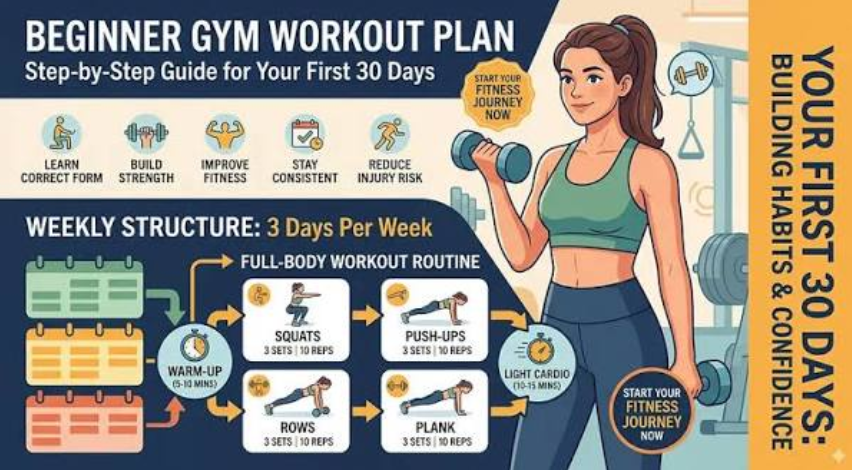

Starting a fitness journey can feel exciting and overwhelming at the same time. I remember when I first decided to exercise regularly. I spent hours searching for the “perfect” workout plan, only to end up more confused than motivated. Every website seemed to recommend something different. Some focused on intense gym sessions, while others promised unrealistic results in just a few weeks.
In my experience, the biggest mistake beginners make is trying to do too much too soon. The best daily workout plan for beginners isn’t the hardest one it’s the one you can actually stick with.
Whether your goal is to lose weight, gain strength, improve stamina, or simply become healthier, this guide will help you create a balanced routine that feels achievable. By the end, you’ll have a clear daily workout plan, practical tips, and enough confidence to stay consistent.
Read More: 30 Minute Full Body Workout at Home
Why Every Beginner Needs a Workout Plan
Walking into a workout without a plan often leads to two problems:
- You don’t know what to do.
- You quit after a few days because you’re overwhelmed.
Having a structured routine removes the guesswork. Instead of wondering what exercise comes next, you simply follow your schedule.
A beginner workout plan also helps:
- Build healthy habits
- Prevent injuries
- Improve consistency
- Track progress
- Increase motivation
Small improvements every day eventually create big results.
What Makes a Good Beginner Workout?
A beginner routine shouldn’t leave you exhausted every day.
Instead, it should include:
- Warm-up exercises
- Strength training
- Light cardio
- Mobility work
- Rest and recovery
Your body needs time to adapt. Muscles become stronger during recovery, not while exercising.
I learned this lesson the hard way. During my first month, I exercised intensely every day without taking rest days. Instead of improving faster, I felt tired, sore, and eventually skipped workouts altogether. Once I balanced exercise with recovery, everything became easier.
Before You Start: A Few Important Tips
Before beginning your daily workout plan, keep these simple rules in mind.
Wear Comfortable Clothing
Choose clothes that allow easy movement and supportive shoes that reduce pressure on your joints.
Stay Hydrated
Drink water before, during, and after your workout.
Never Skip the Warm-Up
A 5–10 minute warm-up prepares your muscles and reduces injury risk.
Good warm-up exercises include:
- Marching in place
- Arm circles
- Hip rotations
- Light jogging
- Leg swings
Listen to Your Body
Feeling challenged is normal.
Sharp pain is not.
If something hurts, stop and adjust the exercise.
Your 7-Day Daily Workout Plan for Beginners
This schedule balances strength, cardio, flexibility, and recovery.
Day 1: Full Body Strength
Perform each exercise for 10–12 repetitions.
Repeat the circuit 2–3 times.
Exercises include:
- Bodyweight squats
- Wall push-ups
- Glute bridges
- Bird-dogs
- Standing calf raises
- Plank (20–30 seconds)
Finish with gentle stretching.
Day 2: Cardio and Core
Spend about 30 minutes moving continuously.
Your workout may include:
- Brisk walking
- Cycling
- Light jogging
- Dancing
After cardio, complete:
- Plank
- Dead bugs
- Bicycle crunches
- Heel taps
Keep movements controlled rather than fast.
Day 3: Lower Body Focus
Strengthen your legs and improve balance.
Exercises:
- Squats
- Reverse lunges
- Glute bridges
- Step-ups
- Standing calf raises
- Wall sit
These movements help with everyday activities like climbing stairs and carrying groceries.
Day 4: Active Recovery
Recovery doesn’t mean sitting all day.
Choose gentle movement such as:
- Walking
- Easy cycling
- Yoga
- Stretching
- Mobility exercises
In my experience, active recovery days actually reduced soreness and helped me feel more energetic the next day.
Day 5: Upper Body Strength
Train your arms, shoulders, chest, and back.
Exercises include:
- Wall push-ups
- Incline push-ups
- Shoulder taps
- Chair triceps dips
- Resistance band rows (if available)
- Arm circles
Maintain slow, controlled movements.
Quality always beats quantity.
Day 6: Full Body Cardio Circuit
Perform each exercise for 30–40 seconds.
Rest for 20 seconds between exercises.
Exercises:
- Jumping jacks (or step jacks)
- Bodyweight squats
- High knees
- Mountain climbers (modified if needed)
- Standing punches
- Marching in place
Repeat the circuit 2–3 times.
This improves endurance while burning calories.
Day 7: Stretching and Mobility
Dedicate 20–30 minutes to flexibility.
Stretch:
- Hamstrings
- Quadriceps
- Hip flexors
- Back
- Chest
- Shoulders
- Neck
Finish with deep breathing exercises.
Recovery is part of progress.
How Long Should Beginners Exercise?
Many people assume longer workouts produce better results.
That’s not always true.
For beginners, aim for:
- 20–30 minutes during the first few weeks
- 30–45 minutes once your fitness improves
- Five to six active days each week
- At least one recovery day
Consistency matters far more than workout length.
Beginner-Friendly Exercises That Really Work
If you’re unsure where to start, these simple exercises provide excellent results.
Lower Body
- Squats
- Lunges
- Glute bridges
- Step-ups
- Calf raises
These improve balance, strength, and mobility.
Upper Body
- Wall push-ups
- Incline push-ups
- Chair dips
- Resistance band rows
- Shoulder presses (light weights)
These build functional strength without needing expensive equipment.
Core
A strong core improves posture and protects your back.
Try:
- Planks
- Dead bugs
- Bird-dogs
- Heel taps
- Bicycle crunches
Focus on controlled movement rather than speed.
Cardio
Simple cardio exercises include:
- Walking
- Cycling
- Swimming
- Dancing
- Light jogging
- Jump rope (once comfortable)
Choose activities you enjoy because you’ll be more likely to continue.
Common Beginner Mistakes to Avoid
Many people lose motivation because of avoidable mistakes.
Here are the biggest ones.
Doing Too Much Too Soon
You don’t need advanced workouts during your first month.
Master the basics first.
Ignoring Rest Days
Muscles need recovery.
Skipping recovery often leads to fatigue or injury.
Comparing Yourself to Others
Everyone begins somewhere.
Focus on your own progress instead of someone else’s.
Poor Form
Correct technique matters more than lifting heavier weights or completing more repetitions.
If necessary, slow down.
Expecting Instant Results
Visible changes take time.
However, you’ll often notice increased energy, better sleep, and improved mood within a few weeks.
Nutrition Tips to Support Your Workout Plan
Exercise works best when paired with balanced nutrition.
Focus on:
- Lean protein
- Fruits
- Vegetables
- Whole grains
- Healthy fats
After workouts, eat meals that combine protein and carbohydrates.
Examples include:
- Greek yogurt with fruit
- Chicken with rice
- Eggs on wholegrain toast
- Oatmeal with nuts
Avoid relying on processed snacks after exercising.
How to Stay Motivated
Motivation naturally comes and goes.
Habits keep you moving.
Some strategies that helped me include:
- Scheduling workouts at the same time every day
- Tracking completed workouts
- Taking progress photos every month
- Celebrating small milestones
- Choosing enjoyable exercises
- Working out with a friend
Remember that missing one workout isn’t failure.
Simply start again the next day.
Signs Your Fitness Is Improving
The scale isn’t the only measure of success.
Watch for these improvements:
- Climbing stairs more easily
- Better sleep
- Increased energy
- Improved balance
- Stronger muscles
- Better posture
- Reduced stress
- Faster recovery after exercise
These victories often appear before physical changes.
When Should You Increase Workout Intensity?
After four to six weeks, your workouts may begin to feel easier.
That’s a good sign.
You can gradually:
- Add one extra workout set
- Increase repetitions
- Use light dumbbells
- Walk longer distances
- Reduce rest time slightly
Progress gradually rather than making huge jumps.
Final Thoughts
Starting a daily workout plan for beginners doesn’t require expensive gym memberships or advanced equipment. What matters most is creating a routine you can follow consistently.
In my experience, the biggest transformation wasn’t physical it was mental. Once exercise became part of my daily routine, I felt more energetic, confident, and productive in other areas of life as well.
Don’t worry about being perfect. Focus on showing up, completing today’s workout, and making small improvements over time. Every squat, every walk, and every stretch brings you one step closer to a healthier version of yourself.
Remember, fitness is a journey, not a race. Stay patient, stay consistent, and trust the process. The results will come with time.