
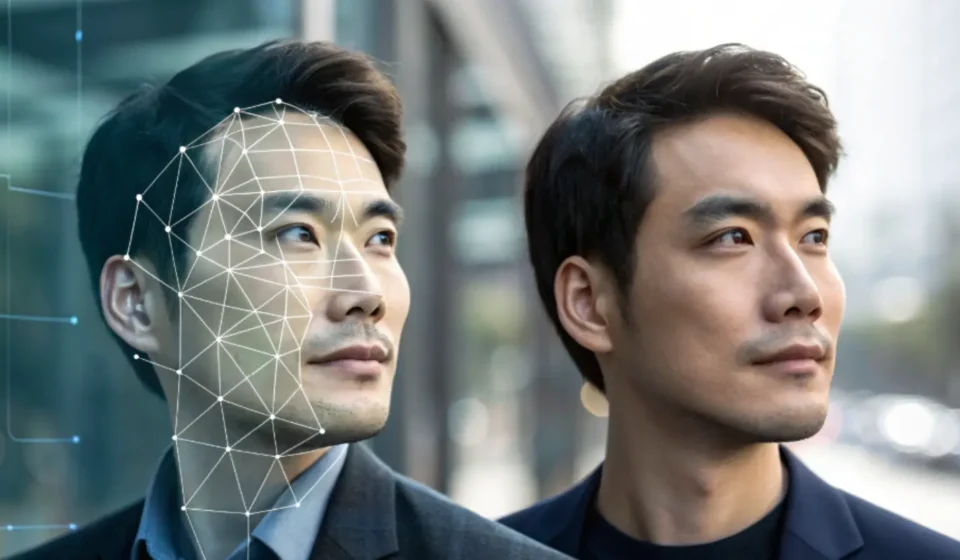

What if you could wear someone else’s face for a day — swap places with a Hollywood star, travel back in time as a historical figure, or step into a fantasy world as an entirely new version of yourself? That’s no longer science fiction. Face swap technology has turned this imagination into an everyday reality, and the way it’s reshaping digital life is nothing short of extraordinary.
From Party Trick to Powerful Tool
Most people first encountered face swapping through a mobile app — maybe they swapped faces with a friend or slapped their face onto a dancing meme. Funny, harmless, instantly shareable. But what started as a social media novelty has quietly grown into one of the most consequential AI technologies of our time.
Today, face swap isn’t just a filter. It’s a sophisticated artificial intelligence system used by Hollywood film studios, digital marketers, game developers, cybersecurity researchers, and medical training programs. The technology has matured from rough, obvious-looking overlays into hyper-realistic face replacements that are nearly indistinguishable from genuine footage — and understanding both its power and its pitfalls is something every digital citizen should do.
How Face Swap Technology Actually Works
Here’s something that most casual users never think about: every time you tap “swap” in an app, a remarkably complex chain of AI processes fires off in milliseconds.
Modern face swapping is built on two core AI architectures, Convolutional Neural Networks (CNNs) and Generative Adversarial Networks (GANs). Think of CNNs as the “eyes” of the system, they scan images, identify human faces, and extract precise structural data. GANs, on the other hand, work like a duo of artists: one generates a new face, the other critiques it for realism, and they keep improving until the result is convincing.
The actual swapping process runs through four distinct stages:
1. Detection — The AI locates every face present in the source image or video frame, distinguishing faces from backgrounds, objects, and other visual noise.
2. Landmark Mapping — It then charts thousands of micro-reference points across each face: the exact arc of each eyebrow, the curve of the lips, the depth of the eye sockets, and the angle of the jawline. These aren’t rough estimates — modern systems can map over 450 individual facial landmarks per face.
3. Geometric Replacement — The source face is warped and reshaped to conform precisely to the target face’s bone structure, pose, and expression. If the target person is laughing, the swapped face laughs too. If they tilt their head, the new face follows.
4. Seamless Rendering — Finally, the system reconciles differences in skin tone, lighting direction, shadow depth, and environmental reflections to create a blend that looks natural rather than pasted-on.
What makes today’s tools remarkable is their speed. What once required professional visual effects labs and weeks of rendering can now happen in real time on a smartphone.
Where Face Swap Technology Is Actually Being Used
Beyond the entertainment value, face swapping has found genuinely serious applications across multiple industries.
Film and Television Production — Studios have used AI face-swapping to de-age actors, digitally resurrect performers for archival projects, and reduce the physical demands on lead actors during reshoots. It significantly cuts production costs and opens new creative possibilities.
Medical and Surgical Training — Some medical education platforms now use facial simulation tools, derived from face-swap technology, to train surgeons in reconstructive procedures — letting them visualize outcomes before operating on real patients.
Personalized Marketing — Brands are experimenting with face-swap-powered “try-on” experiences that let customers digitally wear products — from eyewear and makeup to hairstyles — before purchasing.
Cybersecurity and Biometric Research — Paradoxically, face-swap tools are actively used by security researchers to stress-test facial recognition systems. By generating synthetic faces, they identify weaknesses in authentication technology before malicious actors can exploit them.
Virtual Reality and the Metaverse — Platforms are integrating real-time face swapping to allow users to project their actual facial expressions onto custom avatars, creating far more immersive and emotionally authentic virtual interactions.
Read More: Real-Time Charting in JavaScript: Techniques for Streaming Data
The Ethical Reality Nobody Should Ignore
The same technology that helps a filmmaker tell a better story can be weaponized to destroy someone’s reputation. Deepfakes — hyper-realistic fake videos created using face-swap AI — have been used to spread political misinformation, fabricate non-consensual intimate imagery, and commit identity fraud.
This isn’t hypothetical. Researchers have documented thousands of deepfake cases causing real harm to real people. The challenge is that detecting AI-generated faces is growing harder as generation quality improves.
Responsible use requires three things working together: robust detection tools that can flag synthetic media, media literacy education so everyday people can critically evaluate what they see, and clear legal frameworks that assign accountability when face-swap technology causes harm.
What’s Coming Next
The next generation of face-swap technology will be even more tightly woven into daily digital life. Real-time video call face transformation, fully personalized metaverse avatars that mirror your actual expressions, and AI-driven content personalization are all already in active development.
The technology itself is neutral. What matters enormously is who controls it, how it’s regulated, and whether the people using it understand its implications. Face swap is no longer just about fun filters — it’s a mirror held up to how society will navigate the increasingly blurry line between what’s real and what’s generated.
Understanding this technology today isn’t optional — it’s essential preparation for the digital world already unfolding around us.